Wednesday, 17 August 2011

D Day part 3 St Mere Eglise

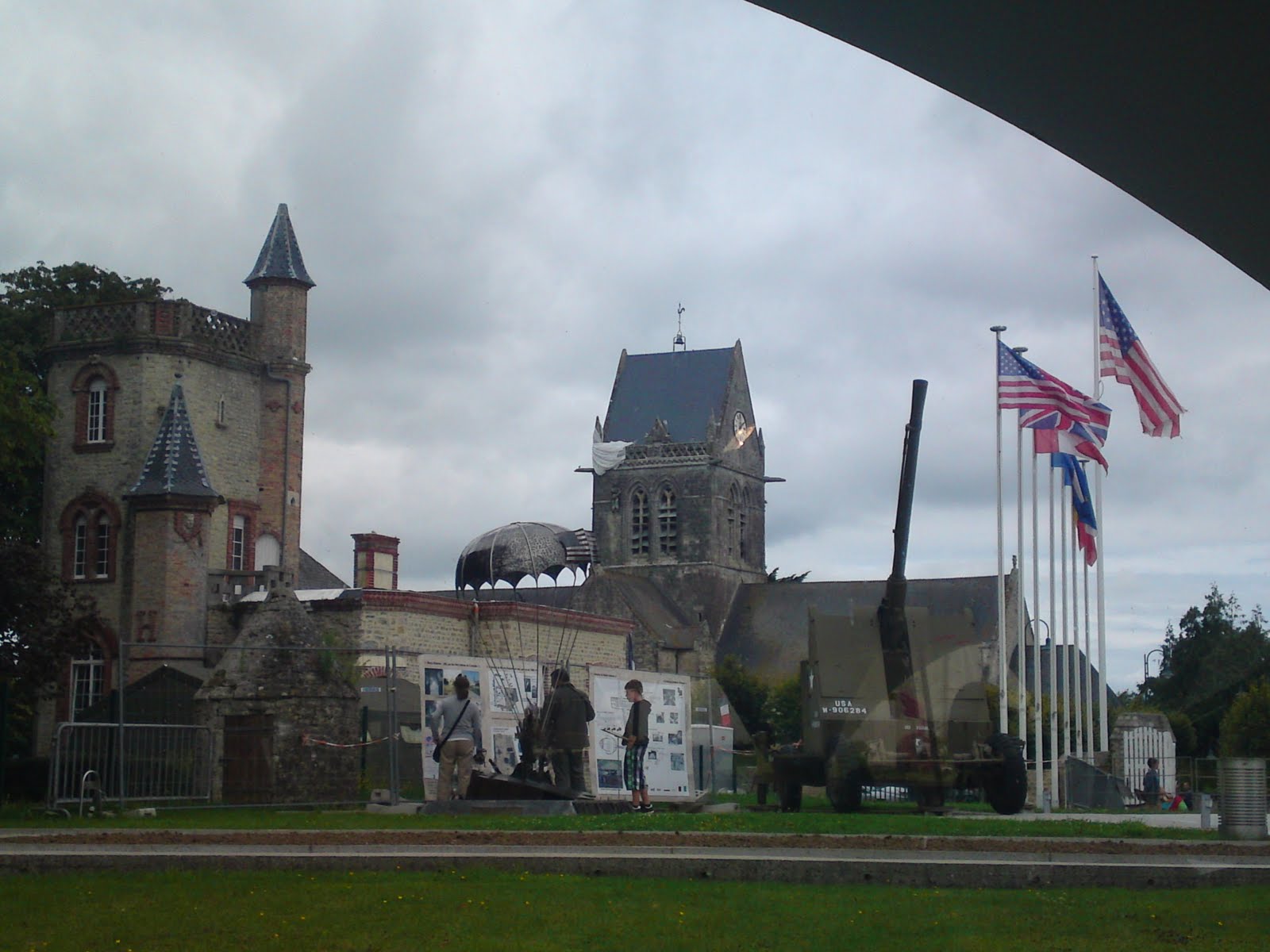
The Germans took St Mere Eglise on June 18th 1940 and the next four years passed relatively peacefully, soldiers were billeted in the town and a swastika flew over the town hall. During 1943 the number and quality of the occupying troops decreased. By the time of D-day the town was occupied by Austrian anti aircraft gunners, driving wood burning trucks. During 1944 there were frequent allied air raids on the town and the night of June 5th - 6th was no different. A house in the square caught fire, (now the site of the airborne museum) possibly caused by one of the marker flares dropped by the pathfinders. The inhabitants formed a chain with buckets from the pump in the square (now a listed monument). At this point parachutes were seen in the night sky and began landing in and around the town. It was the 82nd airborne division. The Germans opened fire and ordered the locals into their houses. The Austrians left and only a few Germans continued the fight. The town was taken by members of the 505th led by Lieutenant-Colonel Edward C. Krause. At 04:30 the stars and stripes were hoisted over the town and St Mere Eglise was the first town to be liberated in France. The town was made famous by the paratrooper John Steel and by the film "The Longest Day". John Steel managed to land on the church and his chute caught on the steeple. He hung there while the fighting continued on the ground for two hours before being cut down by the Germans, taken prisoner and later released by the Americans. An effigy of John Steel is usually to be seen on the church. Inside the church there are two stained glass windows, one shows the Virgin Mary surrounded by paratroopers, the other shows St. Michael (patron saint of the paratroopers) and was dedicated in 1972. The liberation monument in the square was covered by a chute during the making of The Longest Day as the town mayor would not allow its removal. The Airborne Museum began in 1961, houses many interesting artifacts including a DC3 aircraft used on D-day together with a glider. Outside the Town Hall is a pink marker stone of "Kilometre Zero". These markers were placed by the French Government in 1946, each Kilometre along the route taken by General Leclerc’s Free French 2nd division, they can be seen from North Africa to the town of Bastogne the last town in Europe to be liberated. The town war memorial is situated behind the marker and plaques commemorate the liberation of the town. There is also a plaque to the Generals Ridgeway and Gavin and all the liberators. In the town hall are the Stars and Stripes, flown over the town on the day of liberation, it was also flown at Naples in 1943 when it too was liberated. It was brought to Normandy by Lieutenant-Colonel Edward C. Krause. It was given to the town by his widow on his death.  Fighting continued around the town until the afternoon of June 7th when tanks landed at Utah arrived and secured the area.


This You Tube clip is the clip from the actual film 'The Longest Day' and recounts the events from that eventful night. 

I really enjoyed the town of St Mere Eglise, so much so I visited it twice whilst I was there.  Despite the events of the night of 5/6 June the town has a good buzz to it and the town is very respectful to the American 82nd Airbourne and all they did for the town.  There are monument and memorials all around the town commerating individuals and the events of that night and the following weeks.  The musuem just of the square is one of the best in Normandy.

Here I am in the square just outside the church.  You can see the tribute to
paratrooper John Steele on the church tower..

A close up of the John Steele dummy

Throughout Normany there must be a battalions strength of tanks.  Here is just one of them, a Sherman
in the grounds of the museum.  You can see how close the church is on the left of the pic.

One of the exhibits, a Dakota showing members of the 82nd boarding a Dakota
before the 'big off'.  This Dakota was actually used on D Day.  The musuem is packed
with contemporary items and you can spend hours looking over the exhibits.


This is a view from inside the musuem looking out of one of the windows back
towards the square.  Part of the musuem is built on the actual site of the burning
building that is portrayed in 'The Longest Day'

A contemporary shot of the street to the side of the church.  The Americans
are clearing the buildings of snipers..

..the same street today


One of the many plaques and memorials to be found around the town..
Paratroopers clearing the church...


If you visit Normandy I highly recomend you visit St Mere Eglise.

Sunday, 14 August 2011

D-Day part 2 Pegasus Bridge

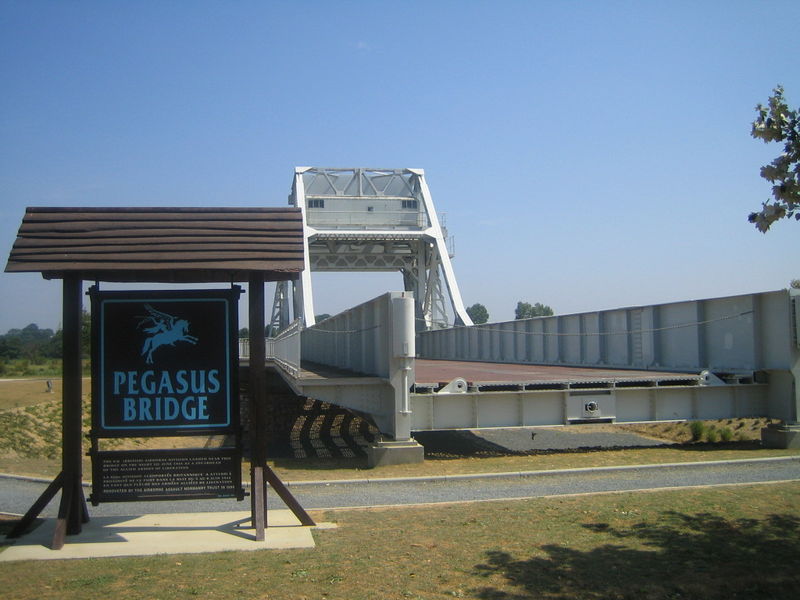
Pegasus Bridge

On the night of 5 June 1944, a force of 181 men, led by Major John Howard, took off from RAF Tarrant Rushton in Dorset, southern England in six Horsa Gliders to capture Pegasus Bridge, and also "Horsa Bridge", a few hundred yards to the east, over the Orne River. The force included elements of B and D Companies, 2nd Battalion, Oxfordshire and Buckinghamshire Light Infantry, a platoon of B Company, Royal Engineers, and men of the Glider Pilot Regiment. The object of this action was to prevent German armour from crossing the bridges and attacking the eastern flank of the landings at Sword Beach.
Five of the Ox and Bucks's gliders landed as close as 47 yards from their objectives from 16 minutes past midnight. The attackers poured out of their battered gliders, completely surprising the German defenders, and took the bridges within 10 minutes. They lost two men in the process, Lieutenant Den Brotheridge and Lance-Corporal Fred Greenhalgh.
Greenhalgh drowned when his glider landed. Lieutenant Brotheridge was killed crossing the bridge in the first minutes of the assault and thus became the first member of the invading Allied armies to die in combat on D-Day.
One glider, assigned to the capture of Horsa Bridge, landed at the bridge over the River Dives, some 7 miles off. Most of the soldiers in this glider moved through German lines towards the village of Ranville where they eventually rejoined the British forces. The Ox & Bucks were reinforced half-an-hour after the landings by Major Pine-Coffin's 7th Parachute Battalion, and linked up with the beach landing forces with the arrival of Lord Lovat's Commandos.
One of the members of the 7th Battalion reinforcements was young actor Richard Todd who would, nearly two decades later, play Major Howard in the film The Longest Day.

Aerial shot showing the close position of the landed gliders in relation the bridge (bottom left)

A shot taken on 12th June 1944 which clearly show the amazing skill of the Horsa Glider pilots.  Lt. Den Brotheridge, the first allied death on D-day was killed where the Jeep is standing as he and his men rushed across the bridge from the eastern side. A Bedford 4x4 engineer's truck is returning from the airborne headquarters area to secure supplies from Sword Beach. The drivers, although in Europe, are still driving on the left side as in England.

Here I am stood at the marker stone planted on the exact landing position of Glider 1.
Each Gliders resting position is marked by a marker stone.
Next to the marker stone here is a memorial bust to Major John Howard.

Looking back towards the bridge from the Glider 1 marker stone.


Standing outside the famous 'Gondree Cafe' this is a view of the new bridge today.


Taking refreshment at the Gondree Cafe.  The daughter of the owners on that
night in June now runs the Cafe and served me the 'Gondree special'

The Gondree Special...and delicious it was too!


In the grounds of the Museum just over the road from the current bridge is the original bridge.
You are allowed to walk on the bridge and see the bullet holes and the holes in the sides of the
bridge that held the explosives the Germans had placed.


Here I am pointing to some very large calibre bullet holes at the top of the original bridge

This is the Gite we stopped in at Isigny sur Mer.  It sleeps 11.
 
 
The kitchen, preparing a meal.  We had a dining room but never used it prefering the cozyness
of the kitchen table.

Friday, 12 August 2011

D-Day Tour part 1 the Merville Battery

Today i begin the French postings, bringing out highlights of my summer trip to France and the Normandy beaches and D-Day sites.  I also visited the Vienne Region and my parents and have pictures from that visit too.  Where possible with the D-Day sites I have included contemporary pictures and accounts to put my pictures into context - i hope you will read these accounts too.  Enjoy..

Honfleur

From the coast at Calais we planned our journey south to take in the traditional French fishing village of Honfleur before thaking in our first D-Day site, the Merville Battery and then finish our journey at our rented Gite at Isigny sur Mer. 

Honfleur is a commune in the Calvados department in northwestern France. It is located on the southern bank of the estuary of the Seine across from le Havre and very close to the exit of the Pont de Normandie. Its inhabitants are called Honfleurais.
It is especially known for its old, beautiful picturesque port, characterized by its houses with slate-covered frontages, painted many times by artists, including in particular Gustave Courbet, Eugène Boudin, Claude Monet and Johan Jongkind, forming the école de Honfleur (Honfleur school) which contributed to the appearance of the Impressionist movement. The Sainte-Catherine church, which has a bell-tower separate from the principal building, is the largest church made out of wood in France.

The harbour area is very pretty with cafe - bars and restaurants galore.


A quick panoramic view of the harbour area.  Spot Eddie at the end begining his very lengthy picture taking process !


It's a very medieval town with streets full of medieval buildings and old fashioned charm. 
The local drink of Calvados is much in abundance

The Merville Battery

This was the first of the many D-Day sites we would visit and actually made me quite emotional, especially as it was brave British lads that took this position.  The Merville battery was a German gun emplacement whose guns overlooked Sword Beach and would bring mayhem down onto the beaches.  So it was up to the British Airbourne Division to take this postion hours before the landings were due to take place.  Out of a force of 750 men due to take the Battery, Colonel Otway could only muster 150 men at the start line due to the scattering of the paratroopers due to fog and flak.  There's a quote at the Battery from one of the younger soldiers who stood by Otways side..."There's not many of us is there sir.."   Just imagine for a moment being there and so short of numbers and you know you still have to have a go at taking this heavily defended position.  They had lost their explosives and had nothing to clear the minefields.  Upon Otway's comand they charged the battery firing their guns from the hip on the run.  They charged straight through the minefield which led to numerous casualties before engaging the enemy in firefights and finally hand to hand combat before taking the postiion.  The story of this action is told in the musuem displays in each of the casemates (the gun bunkers).  In one of them is a sound and light show that attermpts to re-enact the events of that night - and very lifelike it is too and you have to block the urge to duck as the sound of bullets riccocheing off the metal in the bunker you are stood in envelop you with the surround sound on full volume.  You hear the explosions, the chaotic shouts of the German defenders culminating in the charge of the Brits and hearing their voices as they fight their way into the bunker that you are stood in....before finally giving way to silence and some very reflective and moving music.

Here are two links that provide further detail on the assault of the Merville Battery, i highly recomend you take time to read them.


The view on the approach to the Battery today. 

The C47 transport plane nicknamed the 'SNAFU Special' was actually used in D-Day. 
The french guide we met was able to tell us the history of the plane and even showed us it's position
 in the flight on the way to Normandy and who flew it etc.  All the details are here at the site.  The plane
was also involved in the Arnhem drops and othe missions from WWII.

The guide giving us a personal history tour of the plane.  He was a great and very dedicated bloke.

<><><><><><>
<>
<><><><><><>
It was from these wires overhead the paratroopers would shuffle to the door
before jumping out into the void and whatever fate held for them..

..however, Eddie has'nt quite mastered jumping out of a plane lol...


The view from the cockpit window


Me stood in front of one of the casemates (bunkers) with more to the left
sat on top of the main bunker..reflecting on what had gone on here..

Some of the displays in the casemates are quite moving with original artefacts and
contemporary accounts and letters. 

Generaloberst Dollmann (centre) inspects the Merville Battery on the 25th May 1944. On the far right is Oberleutnant Raimund Steiner, the commander of the Battery. At the time that the 9th Battalion attacked, Steiner was at an observation post on the beach

  • a. Casemate No. 1
  • b. Casemate No. 2
  • c. Casemate No. 3
  • d. Casemate No. 4
  • e. Anti-aircraft gun
  • f. Magazine for a. and b.
  • g. Magazine for c. and d.
  • h. Command bunker
  • i. Guard bunker with 12 beds
  • j. Guard room
  • k. Main gate
  • kk. Anti-tank ditch
  • m. Right hand breach
  • n. Left hand breach
  • 1. 9 Para's movement to breaches
  • 2. Diversionary party's route
and here is the link for the official Merville Battery web site http://www.batterie-merville.com/?lang=en/ 
Finally, this link should allow you a virtual panoramic view of the site as it is today 
http://www.batterie-merville.com/wp-content/uploads/media/pano/pano_en.php

And if you are really into the events and histories of the men who went through the action, here is the obituary of Colonel Otway.  It's an interesting read especially the part about the reunion with the German Commander of the Battery and his gutless refusal not to shake his hand...
http://www.telegraph.co.uk/news/obituaries/1524734/Lieutenant-Colonel-Terence-Otway.html


Monday, 8 August 2011

London's Burning

 London's burning, London's burning.
Fetch the engines, fetch the engines.
Fire fire, Fire Fire!
Pour on water, pour on water.

London's burning, London's burning.
Fetch the engines, fetch the engines.
Fire fire, Fire Fire!
Pour on water, pour on water.

London's burning, London's burning.
Fetch the engines, fetch the engines.
Fire fire, Fire Fire!
Pour on water, pour on water.

Saturday, 6 August 2011

Les vacances françaises 2011

I'm back!

Well, another wonderful trip to France is at an end.  It's been a great two weeks on the continent but all good things must come to an end.  Over the next fortnight I will post pics and speak about some of the amazing places I have visited.  As a taster here is just a few for now...

I have...

Stopped at a great 'Gite'..


visited some lovely French villages..


sat on many tanks...


been inside planes..


paid respects at the cemetries..


visited the graves of English kings..

visited abbeys..


visited chateaux..


...museums..


Climbed on guns...


Peered out of pillboxes


visited the beaches..


visited friends...


and eaten and drank great food and wine..

à bientôt!


Friday, 22 July 2011

Headingley - yesterday YORKSHIRE v SCUMSHIRE

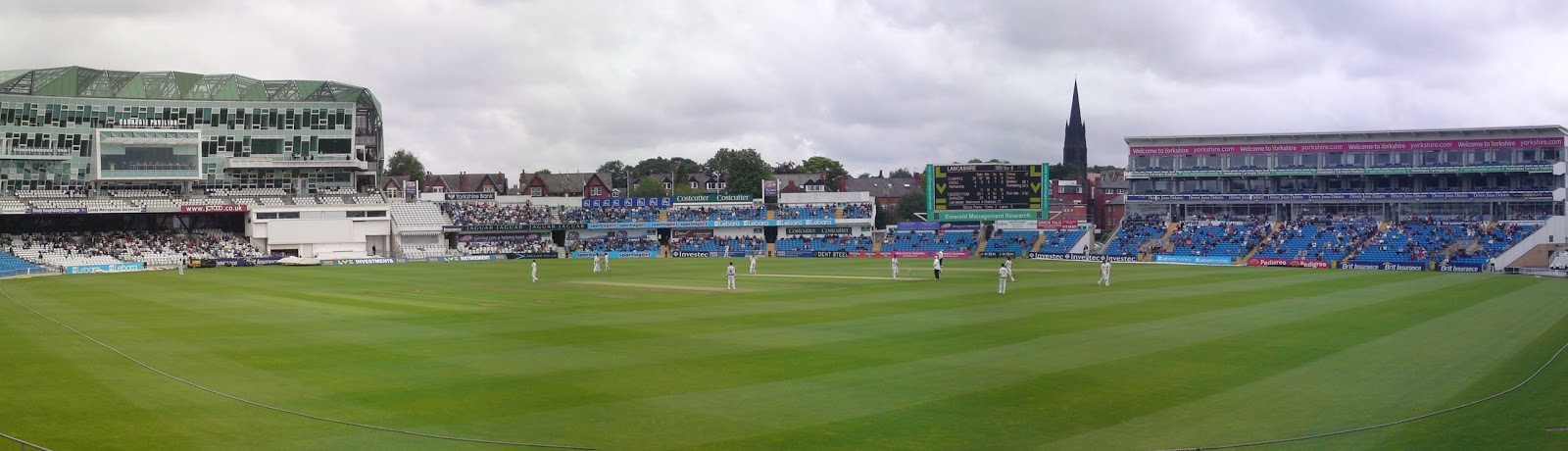
Had a great day at Headingley yesterday at the Yorkshire v Lancashire 4 dayer.  A few beers were supped, a few laughs were had and a good days cricket observed.  Here's just a couple of pics as Steve  'the tickets' and 'Pedro' Pete will send me more to post on here.

And were off!  Come on Yorkshire!  Our view from the Western Terrace


We've found the bar....this is the the bar in the 'Long Room' at the Eastern Terrace


Mmmm more beer..


and some, er,...more beer


the chauffer has arrived to carry us home!


end of the day, the covers are on, were holding each other up...time to go home!

The fun bus home.  Were not brahms, honest!